Unveiling the Past: A Guide to Researching NSDAP Membership Files for Family History
The echoes of the past often whisper through generations, leaving questions unanswered and stories untold. For many families with German roots, the shadow of World War II and the Nazi era casts a particularly complex and often painful challenge: understanding the roles their ancestors played. Was Opa merely a civilian caught in the maelstrom, or did he actively support the regime? Did Oma stand by silently, or was she part of the larger machinery? These are not questions easily asked, nor are the answers always comforting. Yet, for a comprehensive understanding of family history, confronting these difficult truths is essential. A crucial resource in this journey of discovery lies within the meticulously maintained, yet nearly lost, NSDAP membership files – a historical treasure trove that helps connect individuals to one of history's darkest chapters, often referred to in German contexts as the
Zeit Nsdap Mitgliederkartei.
The Legacy of Silence: Why Researching Past Affiliations Matters
For decades, a veil of silence often shrouded the wartime experiences of many German families. The generation that came of age during the Nazi era, deeply scarred by the conflict and its aftermath, frequently chose not to speak of their pasts. This silence, whether born of shame, trauma, or a desire to move forward, has left subsequent generations grappling with fragmented narratives, half-truths, and often unsettling rumors. As noted by personal accounts, many only have "halfsentences, rumors, silence" to piece together their ancestors' lives during the Third Reich. Today, with most of that generation gone, the opportunity for direct testimony has vanished, leaving descendants with an urgent need to uncover historical records to understand what their grandparents or great-grandparents "did or failed to do" and "how they stood towards the Third Reich – what they supported."
The motivation behind such research is rarely to condemn. Rather, it's about seeking clarity, acknowledging historical realities, and understanding the complex tapestry of individual choices within a totalitarian state. More than 10 million Germans joined the NSDAP between 1925 and 1945. While membership itself doesn't automatically equate to direct involvement in atrocities, it undeniably signifies an active commitment to the Nazi state's ideology and, by extension, its murderous regime. Discovering an ancestor's membership, complete with details like entry date, profession, and sometimes even a photograph, can provide a profound, often shocking, but ultimately illuminating piece of the family puzzle. It compels a deeper reflection on personal responsibility and collective history, offering a vital link to a past that must never be forgotten.
A Near-Loss: The Dramatic Preservation of the NSDAP Files
The survival of the NSDAP membership files is, in itself, a testament to human courage and historical serendipity. As World War II drew to a devastating close in April 1945, with Hitler's Reich crumbling, the Nazi leadership initiated a frantic and systematic destruction of incriminating documents. At the infamous Brown House in Munich, the NSDAP's central headquarters, tons of paper, including the invaluable double-indexed membership card index (once alphabetically, once geographically by Gau), were hastily loaded onto trucks. The order was clear: eradicate all traces.
However, fate intervened. These estimated 50 tons of paper were destined for a paper mill in Freimann, a district of Munich, for complete pulping. It was there that a brave and astute mill owner, Hanns Huber, recognized the immense historical significance of the documents that had fallen into his hands. Defying orders and risking his life, Huber halted their destruction. His remarkable act of preservation saved millions of individual records from oblivion. Shortly after the war's end, in the autumn of 1945, American forces uncovered and secured these invaluable archives. By early 1946, they were transferred to the newly established Berlin Document Center (BDC), meticulously organized and preserved. This extraordinary story of their near-destruction and miraculous rescue highlights the profound importance of these records for understanding the individual engagement with the Nazi regime. To delve deeper into this incredible saga, read more about
From Destruction to Discovery: The Remarkable Story of the NSDAP Files.
Unearthing the Numbers: What Survived and What You Can Find
The sheer scale of the NSDAP's membership—an astonishing 10.2 million Germans between 1925 and 1945—underscores the party's pervasive reach into German society. These members were meticulously recorded in two parallel card indices: a central index (
Zentralkartei) and a geographical or Gau index (
Gaukartei). While the miraculous intervention of Hanns Huber saved the bulk of these records, they are not entirely complete.
Expert analysis provides a clearer picture of what survived. Party historian Jürgen Falter, who extensively researched the membership index for his seminal work
Hitlers Parteigenossen (Hitler's Party Comrades), estimates that approximately 44 percent of the central index and a more substantial 77 percent of the Gau index were preserved. Detailed counts by *Die Zeit* indicate that the central index still contains roughly 4.5 million names, while the Gau index holds an impressive 8.2 million. Crucially, Falter estimates that when both surviving collections are combined, an astounding 90 percent of all former NSDAP members can still be traced. This high survival rate makes the NSDAP membership files an unparalleled resource for genealogical and historical research. To learn more about the scope and content of this massive collection, explore the
NSDAP Membership Database: Uncovering Millions of German Histories.
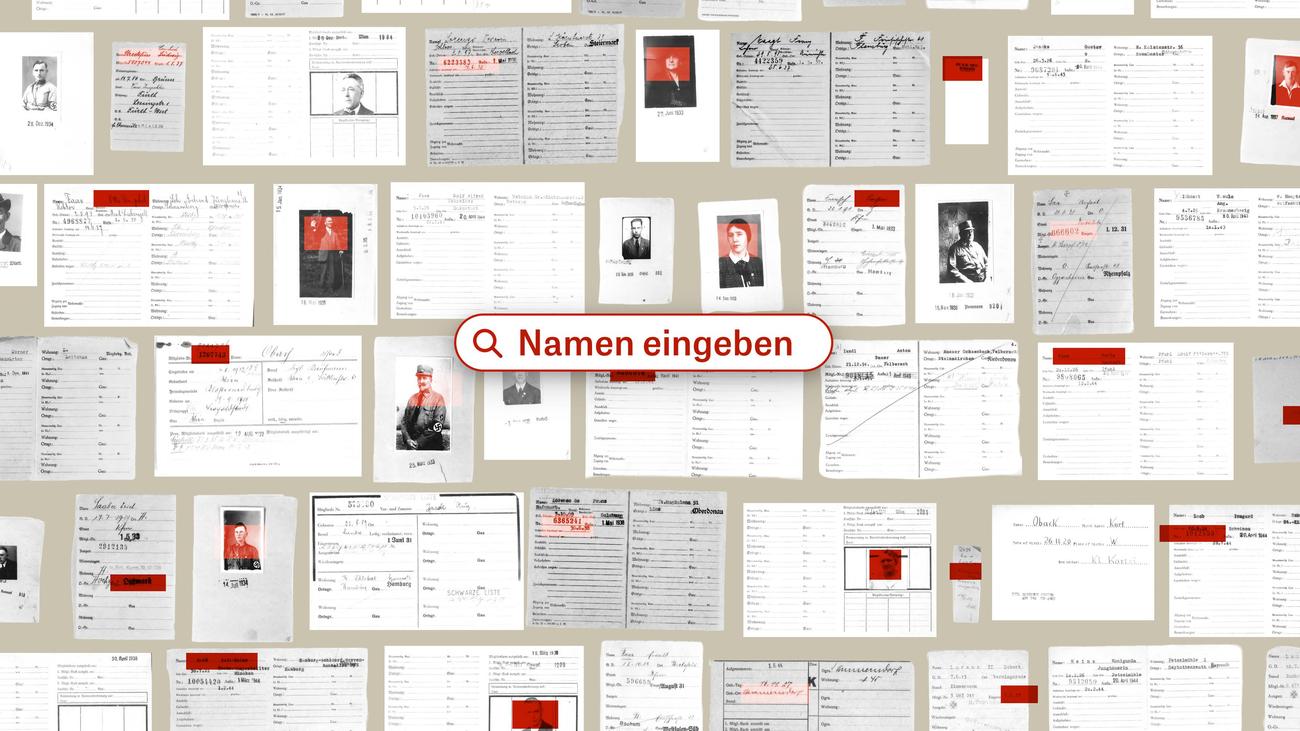
What kind of information can you expect to find on these cards? Each individual card typically contains:
- Membership Number: A unique identifier for the party member.
- Entry Date: The precise date of joining the NSDAP, which can be highly indicative of their early enthusiasm or later opportunism.
- Birth Date: Essential for positive identification.
- Address: The member's residence, offering geographical context.
- Profession: Their occupation, shedding light on their social standing and potential influence.
- Residential Area: Further geographical detail.
- Photograph: In some cases, a small photo is attached, offering a direct visual link to the past, as one researcher discovered, recognizing his grandfather from a wedding photo, complete with a visible membership pin.
These details, often written in old German handwriting, are not just dry facts; they are fragments of a life, offering profound insights into an ancestor's choices and circumstances during a pivotal moment in history.
Practical Steps for Researching the NSDAP Membership Files
If you are considering researching your family's connection to the NSDAP, understanding where to start and what to expect is crucial.
- Locate the Archives: The primary repository for the surviving NSDAP membership files, along with other key Nazi-era documents, is the German Federal Archives (Bundesarchiv), specifically the collection originating from the Berlin Document Center (BDC). The BDC collection was integrated into the Bundesarchiv in 1992.
- Access Methods:
- Online Portals (Limited): While the full database isn't openly searchable online for privacy reasons, the Bundesarchiv does provide information and some digital services. You can often initiate inquiries or find guidance on their official website.
- Direct Inquiry: You can submit a formal research request to the Bundesarchiv. This typically requires providing as much identifying information about your ancestor as possible (full name, date of birth, place of birth/residence). Be prepared for potential waiting times due to the volume of requests.
- On-site Research: For more in-depth research, visiting the Bundesarchiv's Berlin-Lichterfelde location (where the BDC files are held) is an option. However, this requires careful planning and adherence to their research guidelines.
- Professional Genealogists/Historians: If you're unable to conduct the research yourself, consider hiring a professional genealogist or historian specializing in German records. They have expertise in navigating archives and understanding the nuances of the documents.
- Tips for Searching:
- Be Specific: The more precise your information (full name, exact date of birth, known residences), the higher your chances of a successful match.
- Consider Spelling Variations: German names can have various spellings. Be flexible in your search terms.
- Prepare for Difficult Discoveries: Researching this period can be emotionally challenging. Be ready to confront potentially uncomfortable truths about your ancestors.
- Contextualize Findings: Finding a membership card is a significant discovery, but it's often just the beginning. Use other historical records (military records, denazification files, local archives) to build a fuller picture of your ancestor's life and actions. Membership does not automatically imply participation in atrocities, but it does signify a degree of alignment with the regime's ideology.
Conclusion
The pursuit of family history is a journey into identity, a quest to understand where we come from and the forces that shaped our lineage. For those with German heritage, this journey often leads to the profound and challenging landscape of the Nazi era. The NSDAP membership files, a testament to meticulous record-keeping and a dramatic act of historical preservation, offer an unparalleled gateway to understanding individual lives within the context of collective history. While the discoveries can be disquieting, they are vital. By embracing these "late truths," we not only honor the complex legacies of our ancestors but also contribute to a deeper, more nuanced understanding of one of humanity's most crucial historical periods. The courage of individuals like Hanns Huber ensured these records survived, empowering future generations to confront the past and ensure its lessons are never forgotten.